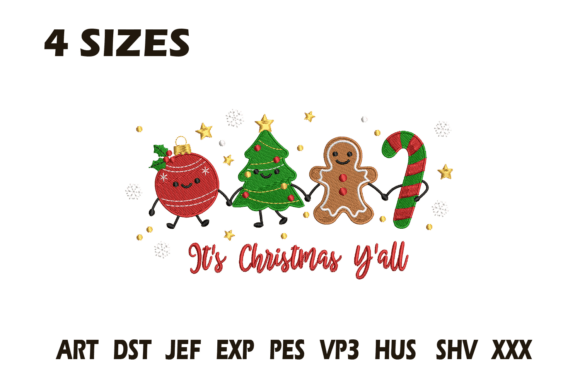
Review: It’s Christmas Y’all Embroidery Design
As a designer who has spent countless hours digitizing and testing machine embroidery patterns, I approach every new file with a mix of curiosity and skepticism. We have all been there: you download a digital embroidery file that looks crisp on the screen, only to find it puckers the fabric or loses its charm once the needle hits the hoop. That is why I took a close look at It’s Christmas Y’all Embroidery to see if it holds up in real-world applications. This isn’t just about aesthetics; it is about functionality, stitch quality, and how well it serves the needs of crafters, Etsy sellers, and boutique owners during the busy holiday season.
First Impressions and Visual Personality
The first thing that strikes me about It’s Christmas Y’all Embroidery is its balanced energy. It manages to be festive without being cluttered. The phrase itself carries a warm, Southern hospitality vibe that appeals to a broad audience, from traditional holiday decorators to modern makers looking for something slightly playful. Visually, the layout feels open and breathable. In embroidery design, negative space is just as important as the stitches themselves. A design that is too dense can look heavy and stiff, especially on softer fabrics like cotton blends or fleece.
This design appears to prioritize clarity. The lettering is distinct, suggesting a thoughtful combination of satin stitch for outlines or smaller text elements and potentially fill stitch for larger decorative components. This mix is crucial for maintaining texture variation. If every part of the design were saturated with dense stitching, the final product would feel like a plastic patch rather than integrated textile art. The mood is inviting, making it an excellent candidate for items meant to evoke comfort and joy.
Real-World Application: The Holiday Tote Test
To truly evaluate a design, you have to imagine it on a finished product. I visualized using It’s Christmas Y’all Embroidery on a canvas tote bag, a staple item for any small shop product line during December. Canvas is a forgiving fabric, but it requires proper stabilization to prevent pull-out. Assuming the stitch density is moderate, this design would sit beautifully on a natural-colored tote. The contrast between bright holiday thread colors and the neutral background would make the text pop, creating an instant eye-catcher for craft fairs or online listings.
Beyond totes, consider custom apparel. A heather grey sweatshirt is a perfect canvas for this type of holiday embroidery. The casual nature of the phrase pairs well with the relaxed fit of a crewneck. However, when working with knit fabrics, you must be mindful of stretch. If the design includes large solid areas, using a cut-away stabilizer is non-negotiable to maintain shape after washing. For a more delicate application, such as baby clothes, you would need to ensure the backing is soft and non-irritating, as baby embroidery demands higher comfort standards.
Technical Considerations for Stitching Success
While the visual appeal is strong, the technical execution determines whether a project succeeds or fails. One area where I always advise caution is with curved surfaces, such as caps. If you plan to use this as a tote bag design or on flat panels, you are likely safe. But for hats, the curvature can distort lettering. If the design is wide, it might wrap awkwardly around the front panel of a cap. I recommend checking the dimensions against your standard hoop size before committing. A 5x7 inch hoop is common for this style, but if the design is larger, you may need a 6x10 or even an 8x8 hoop depending on your machine’s capabilities.
Another critical factor is fabric texture. On textured fabrics like terry cloth towels or waffle-knit aprons, fine details can get lost. If It’s Christmas Y’all Embroidery relies on thin running stitch details for accents, these might sink into the pile of a towel. In such cases, increasing the stitch count slightly or using a topping stabilizer can help the threads sit on top of the fabric rather than disappearing into it. For dark fabrics, ensure your thread colors have enough contrast. A navy blue thread on a black shirt will vanish, ruining the legibility of the message.
Commercial Viability and Brand Consistency
For Etsy sellers and creative entrepreneurs, consistency is key to building trust. A professional-looking embroidered patch or garment signals quality. This design fits well into a cohesive holiday collection. It is versatile enough to work on kitchen towels, pillow covers, and even personalized gifts like monogrammed ornaments. When customers see clean, well-executed stitching, they perceive higher value. Sloppy edges or excessive jump stitches can detract from this perception, so always trim your threads carefully and inspect the back of your work.
Using this design in commercial embroidery projects requires attention to licensing. While many digital files allow for physical sales, you must confirm the terms before listing items. Can you sell the finished product? Can you use the design in printable mockups for your store? These are questions you must answer by reviewing the specific license included with the download. Never assume; always verify. Protecting your craft business means respecting intellectual property rights while leveraging high-quality assets to enhance your offerings.
Practical Designer Notes for Best Results
Before you run this design on a client’s expensive garment, follow these practical steps to ensure a flawless result:
- Test on scrap fabric: Always stitch out a test piece on the same material and weight you intend to use for the final product. This reveals issues with tension, density, or registration.
- Check thread contrast: View your design in black and white on your computer screen. If the elements blend together in grayscale, they will lack definition in real life. Adjust your thread colors accordingly.
- Review stitch density: If the design feels stiff after stitching, the density may be too high for lightweight fabrics. Consider using a lighter stabilizer or adjusting machine tension.
- Confirm hoop size: Ensure the design fits comfortably within your hoop with adequate margin for clamping. Crowding the edges can lead to misalignment.
- Inspect small details: Zoom in on the digitized file. Are there tiny, unnecessary stitches that could cause breaks? Clean up any redundant points if you have editing software.
- Use proper stabilizer: Match the stabilizer to the fabric. Cut-away for knits, tear-away for woven stable fabrics, and wash-away for delicate or sheer materials.
Final Verdict on Usability
It’s Christmas Y’all Embroidery stands out as a versatile asset for the holiday season. It bridges the gap between traditional festive motifs and modern, casual styling. For handmade product creators, it offers a quick way to add seasonal relevance to everyday items. Whether you are decorating a nursery, outfitting a boutique, or creating personalized gifts for friends, this design provides a solid foundation. Just remember that the quality of the final output depends heavily on your preparation. Respect the fabric, choose the right stabilizer, and test thoroughly. When executed with care, this design will elevate your embroidery projects and delight your customers.