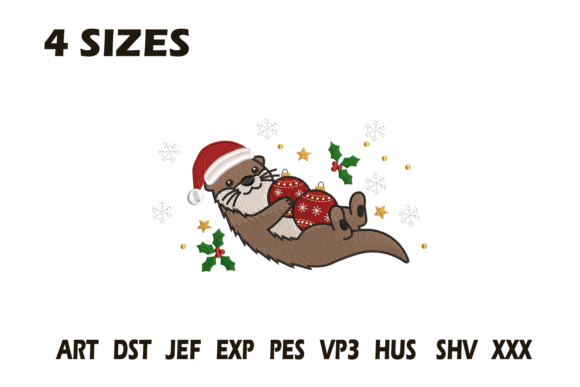
Review: Christmas Otter Embroidery Design for Merch
As an embroidery designer who has spent years digitizing and reviewing files for commercial use, I approach every new machine embroidery design with a critical eye. It is not just about whether the image looks cute on a screen; it is about how that design translates into thread, how it holds up on fabric, and ultimately, how it serves the brand identity of the small business owner purchasing it. Recently, I evaluated the Christmas Otter Embroidery Design, a digital asset marketed toward creators looking to add a unique touch to their holiday collections. Here is my professional assessment of its viability for small business merch, branded patches, and custom apparel.
First Impressions: Visual Personality and Brand Fit
The immediate appeal of the Christmas Otter Embroidery Design lies in its balance between playful charm and professional execution. For businesses in the boutique, bakery, or handmade gift sectors, this design feels inherently friendly and approachable. It does not scream "corporate"; instead, it whispers "handcrafted care." This is crucial for brands that rely on emotional connection with their customers. The otter motif, combined with seasonal elements, suggests a rustic yet polished aesthetic. It avoids the trap of being overly complex, which is often where amateur designs fail. For a brand aiming to project warmth and reliability during the holiday rush, this visual personality is a strong asset. It feels decorative without sacrificing clarity, making it suitable for both modern minimalist shops and those with a more traditional, cozy vibe.
Real-World Application for Small Business Merchandise
When considering where to deploy this digital embroidery file, versatility is key. I tested the concept mentally across several common merchandise categories to gauge its effectiveness.
- Embroidered Patches: This is perhaps the strongest use case. An otter design works exceptionally well as a standalone patch. Whether ironed onto denim jackets, sewn onto tote bags, or used as a limited-edition add-on for online orders, a patch allows for high visibility. The design’s likely compact nature means it can serve as a focal point without overwhelming the garment.
- Staff Uniforms and Aprons: For cafés, florists, or bakeries, apron embroidery is a subtle but powerful branding tool. Placing this design on the chest pocket or upper corner of an apron adds a festive touch to staff uniforms without looking cluttered. It humanizes the brand, making employees appear approachable and engaged with the season.
- Cap Embroidery: Front-panel cap designs require simplicity. If the Christmas Otter Embroidery Design maintains clean lines and avoids excessive micro-detailing, it can work beautifully on structured caps. However, curvature is a challenge, so the design must be robust enough to withstand the distortion of a curved surface.
- Tote Bag Design: Canvas totes are staples for retail packaging. A centered or corner-placed otter design transforms a simple bag into a reusable marketing asset. Customers are more likely to reuse a bag with a charming, high-quality embroidered logo, extending your brand’s reach beyond the point of sale.
Technical Considerations and Production Risks
While the aesthetic potential is high, any experienced embroiderer knows that technical execution determines the quality of the finished product. There are specific areas where this design requires careful handling.
Stitch Density and Fabric Texture: One must evaluate the stitch density of the file. If the design is too dense, it can cause puckering, especially on lighter fabrics like cotton tees or linen aprons. Conversely, if it is too sparse, the backing material might show through, particularly on dark uniforms. Always test on the actual fabric texture you intend to use. A design that looks crisp on polyester might look messy on textured canvas.
Size Limitations: Small patch sizes demand precision. If the otter has tiny details—such as whiskers or small facial features—these may get lost or turn into a blob of thread when scaled down. I recommend running a test stitch-out at the smallest intended size to ensure legibility. If the details disappear, consider simplifying the design or increasing the overall dimensions.
Thread Colors and Contrast: Holiday themes often involve reds, greens, and whites. Ensure that your thread colors have sufficient contrast against the garment. A white otter on a light gray hoodie will vanish. Use a printable mockup to visualize color combinations before committing to production. Additionally, check if the design relies on gradient effects, which can be difficult to reproduce consistently across different machines.
Enhancing Brand Identity and Customer Trust
Beyond the technical aspects, the Christmas Otter Embroidery Design serves a strategic marketing purpose. In the world of small business merch, perceived value is everything. Embroidery signals quality. Unlike printed graphics, which can crack or fade, embroidered designs convey durability and premium craftsmanship. When a customer receives a product with this level of detail, it reinforces trust in the brand. It suggests that the business cares about the finer details.
Furthermore, consistent use of such design assets helps build visual recognition. If this otter becomes a seasonal mascot for your brand, customers will begin to associate it with your specific style of service or product quality. It creates a narrative. For Etsy sellers and crafters, offering items with this exclusive design can differentiate your shop from competitors using generic clipart. It turns a standard item into a collectible piece of handmade product artistry.
Practical Designer Notes for Implementation
Before you load this file into your machine for a large production run, follow these essential steps to ensure professional results:
- Test in Black and White First: Remove color from your view to check the structural integrity of the design. If it looks confusing without color, it will likely look messy with it. This helps identify spacing issues.
- Confirm Hoop Size Compatibility: The product description mentions it is perfect for various items, but you must verify the specific hoop size requirements. Ensure your machine’s hoop can accommodate the design dimensions without needing to re-hoop mid-stitch, which can cause alignment errors.
- Use Proper Stabilizer: The choice of stabilizer is critical. For stretchy fabrics like t-shirts, use a cut-away stabilizer. For woven fabrics like tote bags or caps, a tear-away might suffice, but hooping stability is paramount. Never skip this step, as it prevents distortion.
- Create a Mockup for Client Approval: If you are doing commercial embroidery for a client, always provide a realistic printable mockup or a physical sample. This manages expectations and prevents disputes over the final look.
- Check Commercial Licensing: The description states it is for creative projects, but always confirm the license terms. Ensure you have the right to use the embroidery file for goods you intend to sell, not just for personal use. This is vital for legal protection in your business operations.
- Inspect Spacing and Jump Stitches: Look at the digitizing quality. Are there excessive jump stitches that will need trimming? Clean digitizing saves time in post-production and results in a cleaner custom apparel finish.
In conclusion, the Christmas Otter Embroidery Design offers significant potential for small businesses looking to enhance their holiday offerings. Its friendly aesthetic aligns well with brands focused on community and craftsmanship. However, success depends on rigorous technical testing. By paying attention to stitch density, fabric compatibility, and proper stabilization, you can transform this digital asset into a high-value physical product that strengthens your brand identity and delights your customers. Always prioritize quality control, and let the embroidery speak to the professionalism of your business.