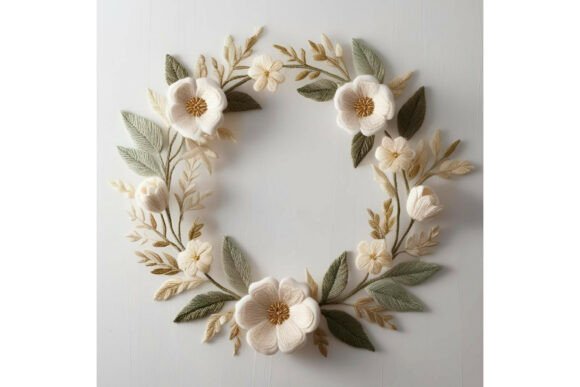
Reviewing Background Floral Embroidery Wreath for Craft Fairs
As an embroidery designer who has spent countless weekends behind a booth table, I know that the difference between a browser and a buyer often comes down to visual impact. When I first pulled up the Background Floral Embroidery Wreath, my immediate thought was about versatility. In the world of handmade markets, you need designs that do not just look good on a screen but translate beautifully into tangible, high-quality goods. This design falls squarely into the category of Backgrounds and Graphics, offering a foundational aesthetic that can elevate a simple item into a premium craft fair product.
First Impressions: Soft Elegance Meets Market Appeal
The title itself suggests a certain softness and decorative intent. Upon reviewing the concept, the Background Floral Embroidery Wreath strikes a balance between rustic charm and modern minimalism. It does not scream for attention with loud colors or aggressive lines; instead, it invites the viewer in. For a craft fair setting, this is crucial. Customers are often overwhelmed by busy displays. A design that feels organic and calming can serve as a visual rest stop, drawing people toward your booth because it exudes quality and care.
This aesthetic works exceptionally well for sellers targeting the farmhouse, cottagecore, or bridal niches. It feels elegant without being stiff, making it a strong contender for wedding gifts, housewarmings, and self-care items. As a machine embroidery design, its success relies on how well it frames the product rather than overpowering it.
Product Applications: Where This Design Shines
The true test of any digital embroidery file is its adaptability. I evaluated how this wreath would perform across various popular handmade items. Here is where I see the highest potential for sales:
- Tote Bags and Market Bags: A tote bag design needs to be recognizable from a distance. Placing this wreath centrally on a canvas tote creates an instant focal point. It transforms a generic bag into a branded accessory.
- Aprons and Kitchen Textiles: For apron embroidery, positioning the wreath on the bib or lower corner adds a touch of sophistication. Similarly, tea towel embroidery benefits from this layout, as the wreath can frame the edge or sit neatly in the corner, leaving room for monograms if desired.
- Pillow Covers and Home Decor: On linen or cotton pillow covers, the floral motif adds texture and depth. It appeals to buyers looking for affordable luxury home updates.
- Embroidered Patches: If scaled down correctly, this could work as a standalone embroidered patch. Patches are high-margin, low-effort items for craft fairs, allowing customers to add a custom touch to their existing jackets or bags.
For Etsy sellers and online boutique owners, this design also serves as an excellent base for printable mockup creation. High-quality images of the wreath on various fabrics can drive online engagement before a single stitch is made.
Production Practicality and Batch Selling
From a production standpoint, time is money. A design that is too complex can eat into your profits due to long machine run times. While the specific stitch count is not detailed in the provided description, the nature of a "background" wreath usually implies a balance between coverage and open space. This is ideal for batch production. You can hoop multiple items, let the machine run, and move on to finishing touches like trimming and pressing.
However, there are critical technical considerations. The description notes that you will receive a zip archive with a JPG file. This is a significant detail. Typically, a machine embroidery design requires specific file formats like PES, DST, or EXP to communicate with the embroidery machine. A JPG is a raster image, not a stitch file. If this product is intended as a graphic reference or a sublimation print rather than a direct embroidery file, you must adjust your production method accordingly. If it is indeed meant for embroidery, ensure you have the correct digitized files or use software to convert the graphic, keeping in mind that auto-digitizing often yields poor results. Always verify the file types included in the download before planning your production run.
Material and Fabric Considerations
The success of the Background Floral Embroidery Wreath depends heavily on fabric choice. Light-colored, smooth fabrics like cotton, linen, or canvas will showcase the thread colors best. Dark fabrics may require underlay stitches or lighter thread choices to maintain visibility. Be cautious with textured towels; the loops can obscure fine details. If the design has dense areas, use a cut-away stabilizer to prevent puckering, especially on stretchy fabrics like those used for caps or pouches.
For curved surfaces like caps, the wreath shape is advantageous because it can be centered easily. However, ensure the hoop size accommodates the full diameter of the wreath without distortion. Testing on scrap fabric is non-negotiable. Check the thread colors against your fabric stock to ensure sufficient contrast. A low-contrast combination might look subtle and elegant, but it risks getting lost in photos or from a distance at a market.
Enhancing Brand Consistency and Visual Appeal
Using a consistent design element like this wreath across your product line strengthens brand identity. Imagine a booth where tote bags, aprons, and pillows all feature variations of the same floral wreath. This coherence signals professionalism and thoughtful curation. It helps customers recognize your small shop product line instantly.
Furthermore, this design aids in creating lifestyle imagery. For your online listings, use the wreath to frame text overlays or product details. It acts as a natural border, guiding the viewer’s eye to the most important information. This is particularly effective for commercial embroidery projects where branding is key.
Final Verdict for the Handmade Entrepreneur
The Background Floral Embroidery Wreath offers a solid foundation for a variety of handmade goods. Its strength lies in its adaptability and aesthetic appeal. However, the deliverable format mentioned—a JPG file—requires careful interpretation. If you are an embroiderer, ensure you have the necessary digitized files to convert this graphic into stitches effectively. If you are a printer or sublimation artist, this graphic may be ready to use as-is.
Before adding this to your inventory, consider these steps:
- Verify the file formats included in the zip archive. Confirm if it is a true embroidery file or a graphic asset.
- Test stitch-out on your primary fabric types to check for density issues.
- Create at least one high-quality mockup to gauge customer interest.
- Review licensing terms. The description thanks you for choosing the job but does not explicitly state commercial rights. Always confirm you have permission to sell finished products made with this design.
In conclusion, if the technical aspects align with your workflow, this design has the potential to become a staple in your craft fair lineup. It offers the elegance buyers crave and the simplicity producers need. By focusing on high-quality materials and precise execution, you can turn this digital asset into a best-selling finished product that stands out in any handmade market.