Review: Knit Hat and Mittens Applique Embroidery
As a designer who spends more time staring at stitch maps than actual fabric, I have learned to be skeptical of cute winter motifs. Too often, they rely on dense fill stitches that puckers thin cotton or lose their charm when scaled down for a baby onesie. However, when I first loaded the Knit Hat and Mittens Applique Embroidery into my software, the clean vector lines and thoughtful layout immediately caught my eye. This is not just another seasonal clipart conversion; it is a structured applique design built for real-world production.
I recently had a client request a set of matching holiday gifts for her grandchildren: a personalized tote bag for the older child and a soft fleece blanket for the toddler. The brief required something festive but not overwhelmingly Christmas-specific, allowing for use through January. This design, with its fair isle style aesthetic, fit the bill perfectly. It evokes the cozy warmth of Winter without relying on religious iconography, making it suitable for Christmas, Hanukkah, or general Yule celebrations. Here is my practical breakdown of how this file performs in a professional embroidery environment.
First Impressions and Visual Appeal
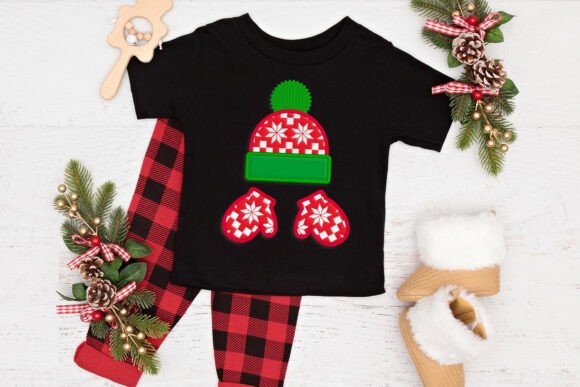
The immediate strength of the Knit Hat and Mittens Applique Embroidery is its silhouette. The pairing of the slouchy hat and the chunky mittens creates a balanced composition that feels intentional rather than cluttered. In applique work, the fabric you choose becomes part of the design. Because this pattern uses a fair isle style, it invites creativity. You are not locked into specific thread colors for the main body of the items. Instead, you can use contrasting fabrics to mimic the look of knitted wool.
For my project, I selected a heather grey felt for the applique pieces against a navy blue sweatshirt. The result was sophisticated and modern. If you are an Etsy seller or small shop owner, this versatility is a major selling point. You can market the same digital embroidery file as a rustic farmhouse item using burlap textures or a preppy boutique product using gingham checks. The visual personality is adaptable, which increases the perceived value of your finished product.
Performance in Real-Life Stitching
When moving from screen to hoop, the technical execution matters most. Applique designs are generally forgiving, but the placement stitches and tack-down stitches must be precise. In my test run on a medium-weight cotton twill, the Knit Hat and Mittens Applique Embroidery laid flat without any shifting. The satin stitch borders were tight and uniform, covering the raw edges of the fabric cleanly. This is crucial for durability, especially if the item will be washed frequently.
I tested the design on several substrates. On a structured tote bag, the design held its shape beautifully, adding a professional touch to what is often a plain canvas item. For custom apparel, such as a crewneck sweatshirt, the design sat comfortably on the chest without creating a stiff, cardboard-like feel. This is a common complaint with heavy fill stitches, but since this is an applique, the bulk is minimized. The stitch density is managed well, focusing only on the border details and the internal fair isle patterns, leaving the main fabric areas open.
For those creating baby embroidery items, the softness factor is key. I stitched a version onto a minky blanket. The satin stitch border provided a nice texture contrast against the plush fabric, and because there were no dense fills in the center of the mittens or hat, the blanket remained soft to the touch. This makes it an excellent choice for personalized gifts where comfort is a priority.
Strategic Placement and Hoop Considerations
One of the most practical aspects of this package is the inclusion of five sizes. As a designer, I always advise checking your hoop size before purchasing, but having multiple options allows for strategic placement. The largest size works wonderfully as a central focal point on a pillow cover or a large apron. The smaller sizes are ideal for embroidered patches or pocket accents on flannel shirts.
However, caution is needed when working with curved surfaces. If you plan to use this on a cap, ensure you are using the smallest size provided. Larger designs can distort on the curved panel of a baseball cap, causing the satin stitch to gap or pucker. Also, consider the fabric texture. Highly textured fabrics like loose-weave linen may require a heavier cut-away stabilizer to prevent the fabric from pulling away from the satin stitch border during wear.
Dark fabrics present another consideration. The preview images might show light-colored applique fabrics, but if you are stitching on black or navy, ensure your placement stitches are visible. I recommend using a contrasting thread color for the initial placement line, then switching to a matching thread for the final satin stitch border. This ensures precision without leaving visible guide marks on the final product.
Commercial Viability for Craft Businesses
For craft business owners and digital product sellers, the Knit Hat and Mittens Applique Embroidery offers strong commercial potential. Holiday embroidery sells well, but the market is saturated with generic snowflakes and trees. This design stands out because it feels handmade and artisanal. It appeals to buyers looking for unique, high-quality items rather than mass-produced decor.
When creating printable mockups for your online store, this design photographs well. The clear lines and distinct shapes read clearly even in thumbnail images. This improves buyer engagement and click-through rates. Furthermore, because the design is versatile, you can create a cohesive collection. Imagine offering a matching set: a tote bag, a tea towel, and a mug rug, all featuring the same motif. This encourages bundle purchases and increases average order value.
Before selling finished items, always confirm the licensing terms included in the zip file. While most designers allow commercial use for physical products, restrictions may apply to digital resale. Ensure you are compliant to protect your small shop product listings from takedowns.
Practical Designer Notes
To get the best results from this machine embroidery design, follow these practical steps:
- Test on scrap fabric first: Always run a test stitch-out on the same type of fabric you plan to use for the final product. This helps you adjust tension and stabilizer choice.
- Check thread color contrast: Ensure your border thread contrasts enough with the applique fabric to define the shape, but not so much that it looks disjointed.
- Use proper stabilizer: For stretchy fabrics like jersey or fleece, use a cut-away stabilizer. For woven cottons, a tear-away may suffice, but hooping firmly is essential.
- Inspect small details: Zoom in on the fair isle pattern elements. If you are scaling the design down significantly, ensure these details do not become too dense or merge together.
- Verify file formats: The product description mentions 8 formats are included. Confirm that your specific machine brand is supported before starting your project.
In conclusion, the Knit Hat and Mittens Applique Embroidery is a reliable, versatile asset for any embroidery designer’s library. It balances aesthetic charm with technical practicality, making it suitable for everything from high-end boutique merchandise to heartfelt personalized gifts. By understanding how to leverage its applique structure and fair isle styling, you can create products that stand out in a crowded market.